Diastasis Recti After Pregnancy: Causes of Hernia, Constipation & Back Pain Explained
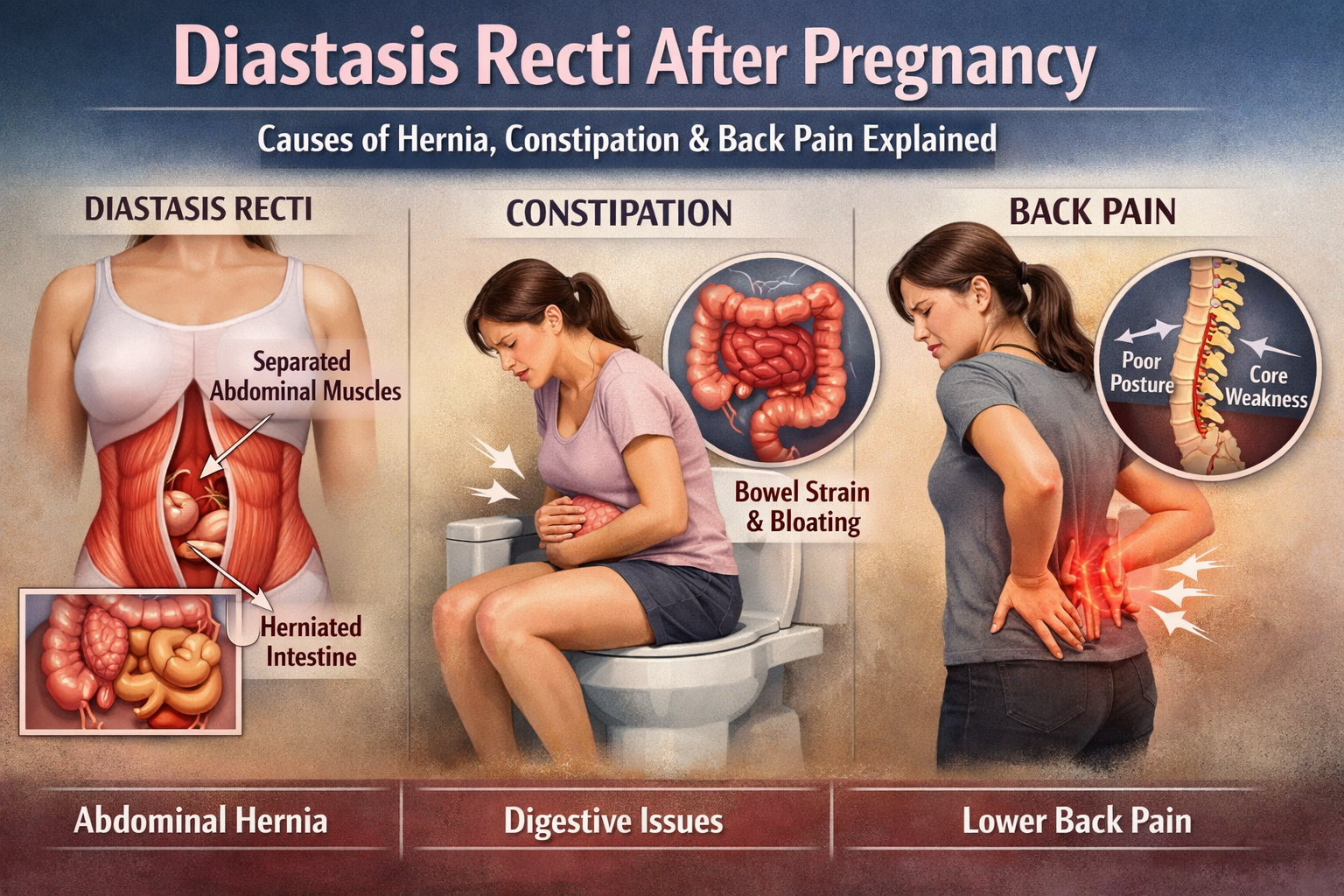
It is an amazing experience to be pregnant, and it brings several physical changes to women’s bodies. A common condition mothers experience following childbirth is diastasis recti. It occurs when abdominal muscles are stretched and separated in pregnancy. If they do not get back to their normal positions following delivery, this could cause a variety of health issues, like Postpartum Hernia, Constipation After Delivery, and Back Pain After Pregnancy.
If you take care of yourself and follow an appropriate treatment plan, the recovery process is achievable. A lot of women gain greatly from Diastasis Recti Physiotherapy, focused on strengthening the core and helping to heal the body naturally following childbirth.
Understanding Diastasis Recti and Diastasis Recti Physiotherapy
Diastasis recti is a condition that occurs when the 2 sides of the abdominis rectus muscles, the muscles that are vertically located along the stomach’s front, are separated because of pressure exerted by the developing baby. As the baby grows, the connective tissue that connects the muscles is stretched to allow for the growing abdomen.
Some women’s muscles slowly return to their initial position following giving birth. In other instances, the gap is left, which can lead to weakness of the abdominal wall. The weakness could affect digestion, posture, and overall stability. It is one reason that Female chiropractor near me advise Diastasis Recti Physiotherapy as a reliable method to aid in recovery and safely build abdominal strength.
Why Diastasis Recti Happens
A variety of factors raise the risk of developing diastasis recti while pregnant. The abdominal muscles are constantly stretched. If the tension becomes excessive, then the connective tissue may shrink.
Common contributing factors are:
- Multiple pregnancies
- Baby is bigger, and carrying it gets tough
- Weak core muscles before pregnancy
- Abdominal strain is too much
- Incorrect exercises after delivery
When properly guided, Diastasis Recti Physiotherapy could help to address the issues with gradual strengthening and controlled exercises to gradually restore muscle strength.
Connection Between Diastasis Recti and Postpartum Hernia
The most likely complication that can result from weak abdominal muscles can be Postpartum Hernia. If the abdominal wall is weak, the internal organs and tissues can be pushed through the weak area, which can cause a bulge called an abdominal hernia.
A Postpartum Hernia may cause symptoms like:
- An obvious bulge or lump inside the stomach.
- It hurts to lift heavy objects.
- Discomfort during daily movements
If you don’t take care of this issue, it can cause discomfort in the future. The correct Diastasis Recti Physiotherapy aids in strengthening abdominal walls and enhance stabilization of the spine, which could decrease the likelihood of becoming the postpartum Hernia as well as aid in overall healing.
Constipation After Delivery and Abdominal Weakness
Women also experience Constipation After Delivery. It could be due to hormonal fluctuations, diminished exercise or weakened abdominal muscles.
The abdominal muscles assist in creating the pressure needed for bowel movement. When the abdominal muscles are weak as a result of diastasis recti, your body could struggle to keep the normal function of digestion. In the end, Constipation After Delivery will become more frequent and painful.
A regular Diastasis Recti Physiotherapy from the best Physiotherapy centre near me assists in activating and strengthening the muscles in the back and improves abdominal pressure. It can also gradually alleviate constipation after delivery. A better coordination of muscles also aids in digestive health and abdominal health.
Back Pain After Pregnancy and Weak Core Muscles
A common issue among pregnant women is Back Pain After Pregnancy. Abdominal muscles play a significant function in supporting the spine while maintaining the correct posture. When the muscles of the lower back are strained, it frequently compensates for a lack of support.
A higher strain could result in Back Pain After Pregnancy, particularly when raising the baby or doing household chores. Incorrect posture, as well as weak stabilisation of the core, can cause more severe pain.
With specific exercises and supervised therapies, Diastasis Recti Physiotherapy assists in rebuilding the strength of your core and helps improve posture. The strengthening of the abdominal muscles relieves tension on the spine and assists in relieving Back Pain After Pregnancy as time passes. Continuous Diastasis Recti Physiotherapy helps improve stabilisation and balance during everyday exercises.
How Physiotherapy Supports Postpartum Recovery
The process of recovering from diastasis recti demands patience and the correct method. Women often do exercises that place extra stress on abdominal muscles, which can cause the separation to get worse.
A properly-planned Diastasis Recti Physiotherapy programme usually concentrates on:
- Easy core activation exercises for the body
- Breathing techniques that are controlled
- The strengthening of the Pelvic Floor
- Correction of posture and secure body movements
Regular session in Diastasis Recti Physiotherapy. The abdominal muscles slowly regain strength and performance. The supervision of a professional ensures that each exercise is safe and appropriate to help postpartum recovery.
If you are a woman looking for specific postpartum rehabilitation services, Life 360 Physiotherapy, a clinic run by Dr Nitu Verma (PT) best Chiropractor in Raipur and Bhilai, is a reputable clinic that offers specific recovery programs. By utilising the expertise of an expert Diastasis Recti Physiotherapy, moms can restore their muscles and can return to an active and healthy lifestyle.
FAQs
Diastasis recti means the division of abdominal muscles. This happens because the connective tissue between them gets stretched out in pregnancy.
Yes, an abdominal muscle weakness that is severe increases the risk of having a postpartum hernia.
Yes, weak abdominal muscles may decrease spinal support and can contribute to back pain post-pregnancy.
Diastasis Recti Physiotherapy is focused on strengthening the muscles of the core and helping to close the abdominal gap safely.
Hormonal changes and weakening abdominal muscles could cause constipation following delivery.
Most women are able to begin physical therapy a couple of weeks following the birth, subject to medical guidance.
Recovery differs, but most women notice improvement in a couple of months after regular exercise.
In the majority of instances, physiotherapy as well as specific exercises will suffice for diastasis recti, while surgery is necessary in extreme cases.












Post Comment